Short videos are the new storefront window. In a few seconds, people decide whether your brand feels relevant, local, and worth following.
For San Diego businesses, short-form video offers a flexible way to showcase your products, people, services, and brand personality. The region offers varied locations and plenty of opportunities for studio or outdoor content.
This guide will help you plan videos that capture attention and support your broader marketing goals.
TL;DR
- Lead with a clear hook in the opening seconds, then keep the video focused on one useful message and one next step for the viewer.
- Use native formats, on-screen captions, and clear disclosures if a post is sponsored or incentivized.
- Stay legally safe by avoiding unlicensed music. Use platform-safe libraries or licensed tracks.
- If you film on public property in San Diego, check permit rules first.
- Measure watch time, completion rate, and saves. Optimize one variable per week.
Why Short-Form Video Works Now
People scroll fast on social media, but they reward clarity and local flavor. Short-form video compresses your brand story into moments people can feel: a pour-over swirl in North Park, kayak glints in La Jolla, a quick tip from your Mission Valley clinic. The format favors authenticity, quick edits, and useful micro-ideas.
Short videos also make it relatively easy to test different hooks, edits, visuals, and calls to action. Reviewing the results can help you learn what resonates with your audience and build a more repeatable content process.
Know the Rules So You Can Create With Confidence
Regulations are simple at a high level: be truthful, disclose material connections clearly, respect accessibility, and don’t use copyrighted music without permission. In California, businesses that meet certain thresholds also have privacy duties when collecting personal data for marketing. You will see practical pointers for each of these as we go.
Core Strategy for San Diego Brands
Before you start filming, decide what you want the viewer to understand or do next. For a San Diego business, that might mean introducing your team, showing a service in action, highlighting a product, or giving potential customers a reason to visit.
Define One Outcome Per Video
Choose one primary goal for each video, such as awareness, an inquiry, an in-person visit, or a sale. Then build the visuals, message, and call to action around that goal.
- Awareness: A 10–20 second story beat that signals what you do and for whom.
- Foot traffic: A punchy offer and map cue, like “2 blocks from the Balboa Park fountain.
- Lead or sale: A benefit plus a single next step, like “Book a demo” or “DM DEAL for menu.
Match Message to Moment
Choose environments that make sense for the story you are telling and where customers would realistically experience your brand.
- Morning routines: Coffee shops, gyms, and quick service spots.
- Weekend plans: Beaches, parks, events, and neighborhood markets.
- At-home decisions: Service demos, how-tos, and before/after clips.
Script the Hook, Then the Payoff
For the hook, give viewers a reason to keep watching in the opening moments. That could be an interesting close-up, a useful question, a product in action, or a clear on-screen statement.
For the payoff, answer the promise fast. Keep one core point, then end with a clear call to action.
Make It Accessible and Compliant
Add accurate captions so viewers can watch with sound off and people with hearing disabilities get the message.
If a video includes a paid, gifted, employment, or other material relationship, disclose that connection clearly and conspicuously. For video endorsements, include the disclosure within the video rather than relying only on the caption or a platform label.
Use only music you have rights to. Avoid assuming a few seconds is fair use.
Production Options Compared
If you’re deciding how to produce short-form content for your business, choose the approach that fits your budget, timeline, and level of creative control. The right option may range from simple in-house content to a professionally planned studio or location shoot.
| Option | Cost | Speed | Creative Control | Reach Potential | Best For |
| In-House Phone + Light Kit | Low | Fast | High | Medium | Daily stories, product quick hits |
| Professional Studio or Location Shoot | Medium | Moderate | Highest | Medium | Campaigns, brand consistency |
| Creator Partnership | Variable | Fast | Shared | High | Trend-driven reach, UGC tests |
| Hybrid (You + Creator + Editor) | Medium | Fast | High | High | Scalable always-on content |
San Diego Location Tips
Selecting the right backdrop gives your footage an authentic, relatable feel that instantly resonates with local followers.
Get Great Looks With Minimal Hassle
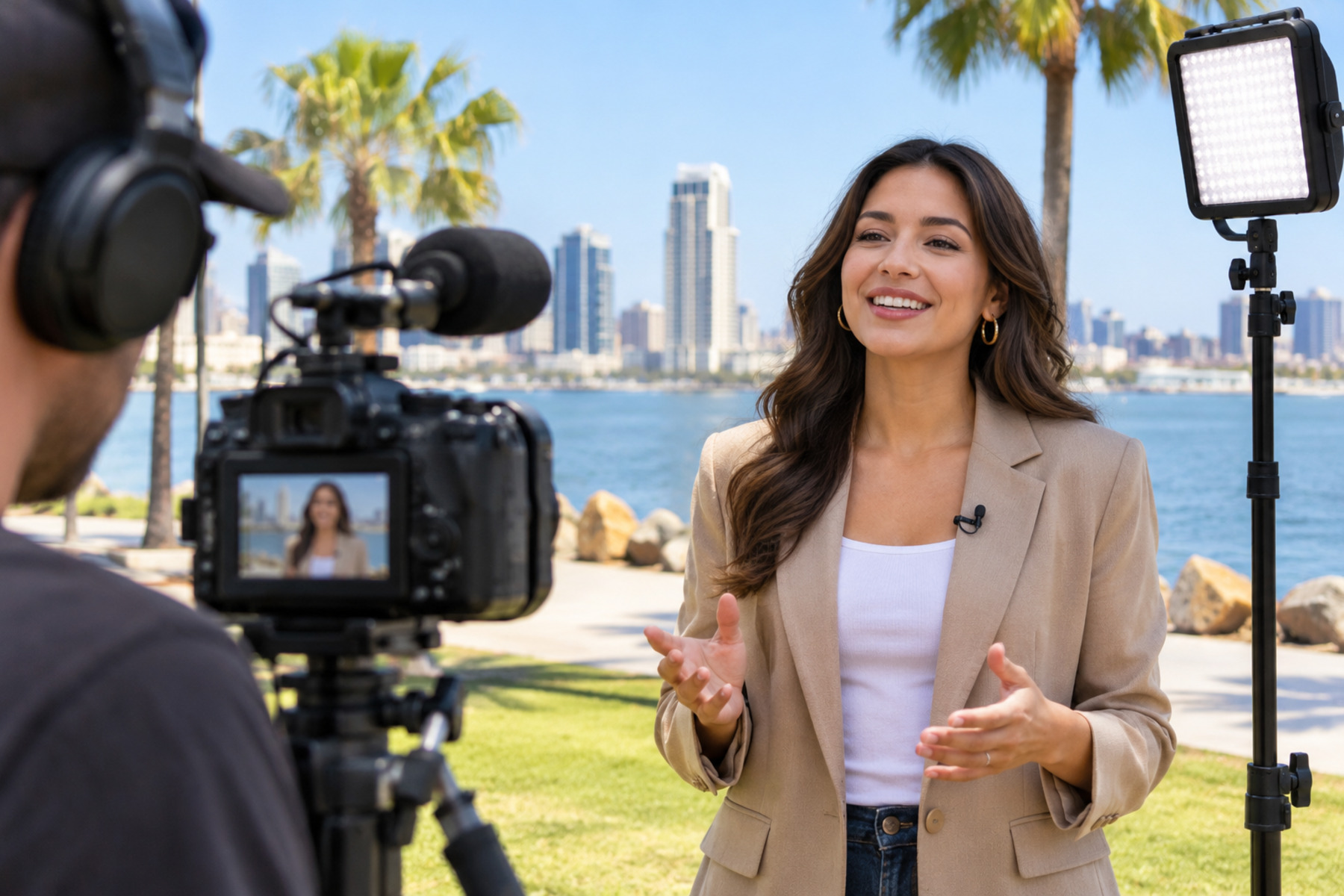
San Diego offers plenty of opportunities for outdoor shoots year-round. In very bright conditions, an ND filter can help you control exposure and motion, but good positioning and lighting matter more than any single accessory.
If you plan to film at a San Diego beach, park, sidewalk, or other publicly managed location, check the requirements of the agency that controls the property before the shoot. Private locations can involve different permissions, including approval from the owner or property manager.
Build a Local Content Bank
Capture several short B-roll clips at each location, including details, interactions, products, signage you have permission to show, and wider environmental shots. Organize footage by campaign, location, or use case to make it easier to reuse later.
Legal and Accessibility Essentials for Social Posts
Protecting your business reputation while welcoming every potential customer means keeping compliance and inclusive design at the top of mind.
Clear Disclosures for Endorsements
If a post is sponsored, gifted, or involves an employee or influencer, make a clear, upfront disclosure. Phrases like “Ad” or “Paid partnership with…” at the start of the caption or on-screen work well. Don’t hide disclosures behind a “more” tap. Platform tools alone might not be enough.
Captions and Inclusive Design
Add synchronized captions that accurately reflect speech and key sounds. Captions help with comprehension, searchability, and accessibility. WCAG guidance treats captions for prerecorded video as a basic expectation, and ADA resources emphasize effective communication.
Music and Copyright Basics
Popular songs aren’t free to use. No fixed number of seconds is “safe.” If you need music, use platform-safe libraries or secure proper licenses. For YouTube, the Audio Library provides tracks that will not trigger Content ID claims. Other platforms offer similar options or require your own licensed audio.
Privacy and Promotions
If your business is subject to California privacy law and you are collecting personal information through lead forms, giveaways, or ad targeting, provide required notices and honor consumer rights. Scope depends on your size and activities, so align your privacy policy and workflows before you scale.
Permits for Public Spaces
Filming on San Diego beaches, parks, or other city-managed locations may require permits. County-managed sites have separate rules. Check requirements early to avoid reshoots or fines.
Efficient Workflow for Repeatable Results
Whether you create videos in-house or work with a professional team, a clear workflow can make production more efficient and keep everyone aligned from planning through final delivery.
Pre-Production
Before filming, your team should define the goal, message, and essential shots for each video. If you’re working with a production partner, you can develop these decisions together during planning.
- Set one KPI, whether it’s the completion rate, saves, or cost per lead.
- Outline a 3-beat script, including the hook, value, and CTA.
- Build a shot list and prop list. Stage by location.
Production
Bringing your story to life relies on combining great lighting, crisp audio, and professional camera techniques to highlight your products or services.
- Phone settings: Use 1080p or 4K based on your editing needs, typically at 24 or 30 fps for standard brand content. Use a tripod or other support when you need a stable frame.
- Light: Face the brightest source. Use a clip-on mic for clean voice.
- Coverage: Capture A-roll once, B-roll twice, reactions, and cutaways.
Post-Production
If you’re editing in-house, keep the pacing appropriate for the platform and limit each on-screen text element to one clear idea. If editing is part of a professional production, confirm the intended platforms and deliverables beforehand so the final cuts are formatted for their actual uses.
Add accurate synchronized captions, either within the edit or through the platform’s captioning tools. Always review automatically generated captions before publishing. Export native aspect ratios for each platform. Test thumbnails and first frame.
Distribution and Optimization
Once your videos are published, use your account analytics to see when your audience is most active and which topics, hooks, or formats perform best. Use that information to guide what you create or commission next.
Respond to useful comments and questions promptly so potential customers can continue the conversation with your brand.
Examples
These examples show how a San Diego business could turn one marketing goal into a simple short-form video concept. Use them as starting points, not fixed production formulas.
North Park Coffee Roaster
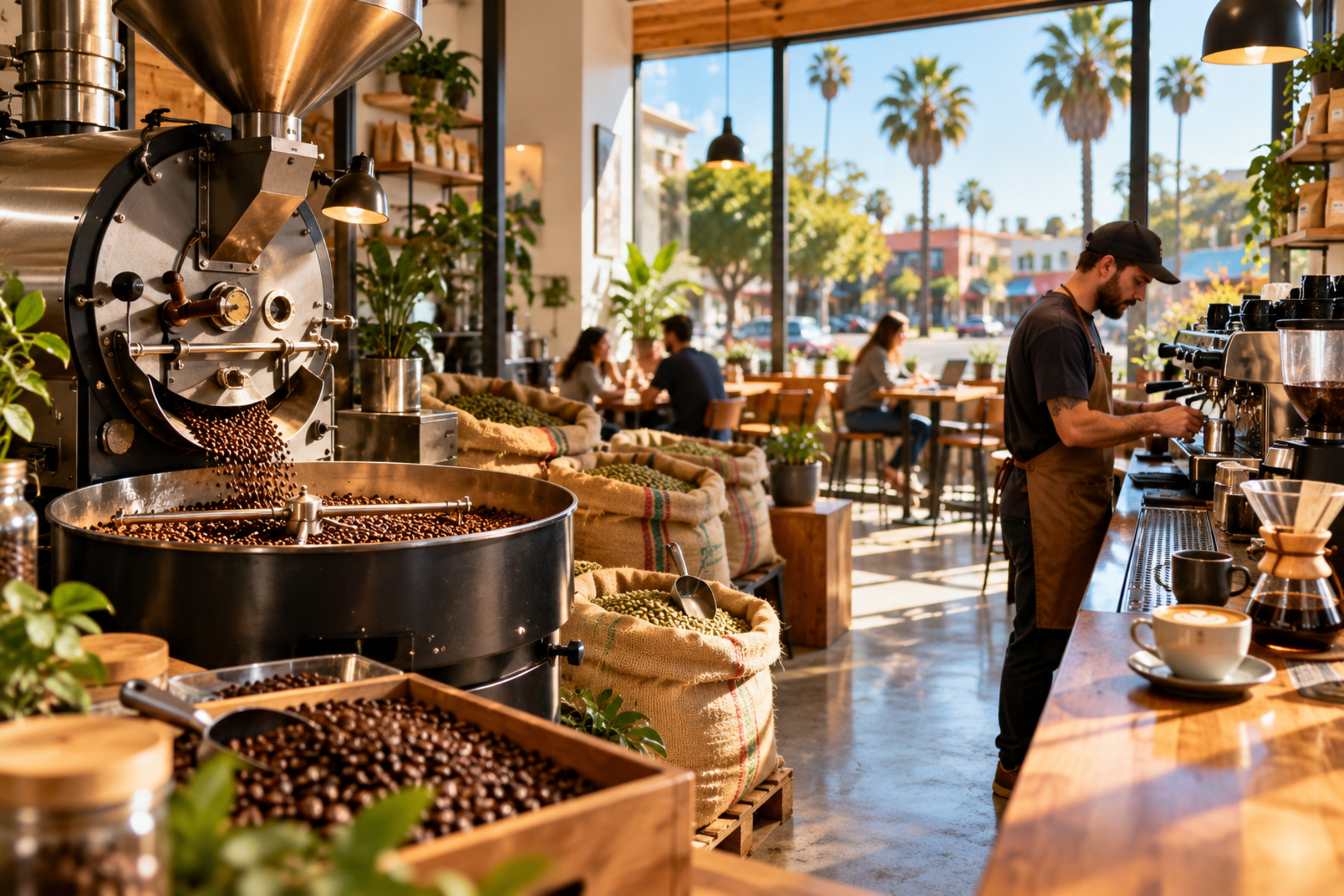
A small roaster films five 12-second clips in one morning: a roasting drum close-up, a barista pouring a heart, a customer sip, beans tumbling, and a chalkboard promo. They cut three versions: vibe-first, process-first, and offer-first.
They test vibe-first, process-first, and offer-first edits using music cleared for the platform and placement. After publishing, they can review watch time, offer redemptions, clicks, or in-store visits to see which approach is most useful.
La Jolla Dental Practice
A clinic creates a monthly “60-second smile tip” series. Each video uses a simple three-shot structure: dentist cold-open hook, close-up of a model or tool, and a friendly CTA to book a consult. They add accurate captions, alt text for thumbnail images, and clear language disclosures when a toothbrush brand sponsors a tip.
The practice can track watch time, website visits, appointment inquiries, and direct messages to see whether the series is reaching prospective patients. If the campaign includes filming in a public San Diego location, the team should confirm any required permissions beforehand.
Actionable Steps / Checklist
If your business is planning its next batch of short-form content, use this checklist to organize the strategy before you film in-house or hand the project to a production team.
- Define the primary goal for each video, such as awareness, inquiries, visits, or sales.
- Identify the key message, offer, or takeaway each video should communicate.
- Discuss locations that fit the campaign, whether that means our studio, your business, or another appropriate setting.
- Review the planned A-roll, B-roll, product shots, team footage, and other coverage needed for each concept.
- Confirm how many versions or edits are needed for different messages, platforms, or campaign uses.
- Make sure captions, on-screen text, calls to action, and required disclosures are included where appropriate.
- Confirm the formats and aspect ratios needed for Instagram, TikTok, YouTube Shorts, or other intended channels.
- Make sure any music used is properly licensed or cleared for the intended commercial use.
- Review final cuts for brand accuracy, messaging, and consistency before delivering them for publishing.
- After publishing, monitor performance data such as watch time, engagement, clicks, inquiries, or other relevant campaign metrics.
- Share performance insights with our videography team when planning future shoots so new content can build on what worked best.

Glossary
If you’re working with a photographer, videographer, creator, or internal marketing team, knowing a few common production terms can make planning and reviewing content much easier.
- Hook: The first seconds of a video that grab attention with a visual or claim.
- CTA (Call to Action): A direct next step for viewers, like Book Now or DM DEAL.
- Aspect Ratio: The width-to-height shape of your video. Common short-form is vertical.
- B-Roll: Supplemental footage that covers edits and adds context or emotion.
- UGC (User-Generated Content): Content created by customers, fans, or other users rather than the brand itself. ‘UGC-style content’ may also refer to paid creator content designed to feel native to social media.
- Clear and Conspicuous: A disclosure that’s hard to miss and easy to understand.
- Captions: Synchronized text of speech and key sounds for a video.
- Content ID: YouTube’s system that detects copyrighted material in uploads.
FAQ
Q: How long should a short-form brand video be?
A: There’s no single ideal length. A simple product or brand clip may work in 10–30 seconds, while a demonstration, testimonial, or educational video may need more time.
Q: Can I use a trending song from Instagram or TikTok?
A: Only if the track is cleared for your type of commercial use. Use music licensed for the specific platform and placement rather than assuming a trending song is available for brand content.
Q: Do I need a permit to film at the beach or Balboa Park?
A: Often yes for public spaces. Check the City of San Diego and county pages before you shoot.
Q: Do I have to add disclosures for influencer posts?
A: If there’s a paid, gifted, or employment relationship, make a clear, upfront disclosure in plain language.
Q: Are captions really necessary?
A: Yes, for accessibility and performance. They help viewers who watch with sound off and support inclusive communication.
Final Thoughts
Effective short-form brand video starts with a clear message, thoughtful visuals, and content created for the way your audience actually uses each platform. Over time, your business can build a flexible library of footage and images for social media, your website, advertising, and other marketing channels.
For businesses throughout San Diego and the surrounding Southern California area, Bauman Photographers can plan commercial and branding shoots around the campaign itself, whether that means working from our Mission Valley studio, creating polished content at your business, or choosing a location that fits the story you want to tell.
The goal is to create a cohesive set of visual assets you can use across multiple marketing channels.